Implementation of a Multiply-Accumulate Unit Using a Logarithmic Number System on Xilinx FPGA Families
A Project Report Presented to
The faculty of the Department of Electrical Engineering
San José State University
In Partial Fulfillment of the Requirements for the Degree
Master of Science
By
Phuc Duc Nguyen
EE297B Section 01, Fall 2024
Department of Electrical Engineering
Charles W. Davidson College of Engineering
San José State University
San Jose, CA 95192-0084
Abstract - Implementing Multiply-Accumulate (MAC) units for deep neural network computations with conventional floating-point arithmetic often leads to significant hardware overhead and elevated power consumption. To address these challenges, the presented research develops a MAC unit based on the Logarithmic Number System (LNS) and synthesizes it using Vitis High-Level Synthesis (HLS) for deployment on multiple Xilinx FPGA families (Artix, Kintex, Virtex). Transforming multiplication operations into additions within the logarithmic domain reduces the complexity of arithmetic operations, thereby minimizing the reliance on resource-intensive multipliers. Experimental evaluations measure resource utilization, latency, and power consumption, confirming that the LNS-based MAC unit achieves improved efficiency, lower power demands, and robust adaptability across different FPGA architectures. This approach provides an effective pathway for creating energy-efficient, high-throughput MAC accelerators suitable for modern DNN workloads.
I. INTRODUCTION
Deep Neural Networks (DNNs) have revolutionized various domains by delivering exceptional performance in computational tasks such as image classification, natural language processing, and pattern recognition. Despite their impressive capabilities, the training and inference processes of DNNs are inherently computationally intensive, necessitating substantial amounts of energy and processing power. This high computational demand is further amplified by the reliance on traditional floating-point arithmetic, which contributes significantly to hardware complexity and energy consumption in such systems.
To mitigate these challenges, low-precision arithmetic techniques have garnered considerable attention, with the Logarithmic Number System (LNS) emerging as a particularly promising approach for arithmetic operations. LNS offers an efficient alternative to conventional floating-point representations by transforming complex multiplication operations into simpler additions, thereby substantially reducing the computational burden. In this context, Multiply-Accumulate (MAC) units designed using LNS principles present a highly favorable solution for enhancing efficiency in DNN applications.
This paper focuses on the implementation of an LNS-based MAC unit utilizing Vitis High-Level Synthesis (HLS), targeting a range of Field-Programmable Gate Array (FPGA) platforms from Xilinx. The implemented MAC unit is thoroughly evaluated in terms of resource utilization, latency, and power consumption across several FPGA families, namely Artix-7, Kintex-7, and Virtex-7. By conducting a comprehensive comparison of these platforms, we aim to elucidate the performance trade-offs associated with each FPGA architecture and to identify the most suitable platform for deploying LNS-based MAC units in practical applications. The findings presented in this study are intended to assist designers and researchers in making informed decisions regarding hardware platform selection for efficient DNN acceleration, thereby contributing to the advancement of high-performance, energy-efficient neural network hardware.
II. LOGARITHMIC NUMBER SYSTEM
A. Overview
The Logarithmic Number System (LNS) constitutes an alternative numerical representation that harnesses the mathematical properties of logarithms to simplify certain arithmetic operations. In LNS, inherently complex operations such as multiplication and division are transformed into simpler addition and subtraction operations, respectively. This transformation is particularly advantageous because multiplication in traditional arithmetic is computationally intensive and hardware-demanding, requiring a significant number of logic units and resulting in substantial power consumption. By converting multiplication into addition, LNS effectively reduces the overall computational cost and resource utilization.
While this efficiency benefits multiplication and division, it comes at the expense of increased complexity in addition and subtraction operations within LNS, which necessitate the evaluation of nonlinear functions. These non-linear computations can introduce challenges in hardware implementations due to their computational intensity. Unlike the conventional floating-point representation—which defines numbers using a mantissa and an exponent—LNS represents numbers logarithmically. Specifically, each number \(V\) is expressed as:
\(V\ = \ {( - 1)}^{S}\ \times \ 2^{M.F}\) (1)
where:
S is the sign bit,
M is the integer part of the logarithm,
F is the fractional part.
This representation offers a wide dynamic range comparable to that of floating-point numbers, while enabling multiplication and division to be performed with reduced computational cost by simplifying these operations to additions and subtractions of logarithms. Despite these advantages, it introduces a trade-off: addition and subtraction in LNS involve nonlinear functions, which are computationally expensive.
B. Hardware-Friendly Approach
A comprehensive exploration of the formulation of the proposed multi-base Logarithmic Number System (LNS) is undertaken in this section. This includes an in-depth examination of its numerical representation and the corresponding arithmetic operations, which are meticulously tailored to enhance hardware efficiency in deep neural network (DNN) implementations. By extending beyond the traditional confines of LNS—typically limited to base-2 logarithms—the multi-base approach introduces the capability to utilize various logarithmic bases. This generalization significantly augments the system's flexibility and adaptability, enabling it to more effectively accommodate a diverse array of models and datasets. The ability to select from multiple bases allows for the optimization of performance and precision in arithmetic computations, thereby facilitating the development of more efficient hardware implementations for DNN applications.
1) Mechanism of Operation
Contrary to earlier research that restricts the logarithmic base exclusively to 2 [2], the methodology presented in this work introduces a multi-base logarithmic representation. This innovative approach permits the utilization of fractional exponents of the base, thereby enhancing the flexibility and adaptability of the numerical system to better accommodate a diverse array of models and datasets. The mathematical expression of this concept can be formulated as follows:
\(x\ = \ sign\ .\ 2^{\frac{t}{k}}\ \ \ \ t\ = \ 0,1,2,...,\ 2^{\beta - 1} - 1\) (2)
In this formulation, \(\beta\) denotes the bit-width, t is an integer variable, and k represents the base factor that modulates the fractional exponent of the base. The parameter k plays a crucial role in determining the quantization gap, defined as the interval between successive representable values within the numerical framework. Previous research has demonstrated that adjusting k from 1 to 2 can substantially enhance the performance of logarithmically quantized neural networks [1]. Building upon these insights, further relaxation of k can facilitate better adaptation to a diverse array of models and datasets, prompting the proposal of a generalized framework for this base factor. To ensure hardware efficiency, k is confined to powers of 2, thereby maintaining compatibility with conventional digital logic operations.
2) Arithmetic Operations:
A major advantage of utilizing the Logarithmic Number System (LNS) lies in the reduced computational cost associated with arithmetic operations. This reduction is particularly advantageous for the calculation of dot products, which are fundamental and frequently occurring in the training of deep neural networks (DNNs). By representing numerical values in LNS, the complexity of multiplication operations is significantly diminished, as they are transformed into simple additions.
Consider two vectors \(a,b\ \in R^{n}\) represented by their logarithmic values \(a_{i}\ \)and \(b_{i}\)in LNS. The dot product between these vectors can be expressed as:
\(a^{T}b\ = \ \sum_{i = 1}^{n}{}{sign}_{i}\ \times \ 2^{a_{i}\ + \ b_{i}}\) (3)
where \({sign}_{i}\) = \({sign\ (a}_{i})\ \otimes \ {sign\ (b}_{i})\) . In this representation, each element-wise multiplication is effectively transformed into an addition of integer exponents, significantly reducing computational overhead by replacing multipliers with adders.
While multiplication in LNS is relatively straightforward due to the additive property of logarithms, the accumulation process requires converting values from the logarithmic domain back to the linear domain. This conversion involves computing \(2^{p_{i}}\) through polynomial approximations of exponential functions, which can be computationally intensive.
To address this challenge and improve hardware efficiency, the exponent is decomposed into a quotient and a remainder:
\(2^{p_{i}}\ = 2^{p_{i,q}\ + \ \frac{p_{i,r}}{k}\ }\ = \ 2^{p_{i,q}}\ .\ 2^{\frac{p_{i,r}}{k}}\ \) (4)
This decomposition facilitates conversion using only a lookup table for \(2^{p_{i,r}}\), followed by a bit shift for \(2^{p_{i,q}}\). The remainder \(2^{p_{i,r}}\), which can be efficiently extracted from the least significant bits (LSB) of the exponent, requires a relatively small lookup table, while the quotient is derived from the most significant bits (MSB).
3) Conversion Approximation:
To further reduce the cost of LNS-to-integer conversions in hardware, a lookup table (LUT)-based approach is implemented where only the remainder portion of the exponent is managed by the LUT. This technique uses a decomposition of the exponent into a quotient and remainder, where the remainder is precomputed and stored in the LUT, while the quotient is handled with simple shifting operations. This approach minimizes the size of the LUT, reducing memory requirements and enabling efficient conversions.
4) LUT-Based Conversion
In this method, the exponent is decomposed into a quotient component and a remainder component as follows:
\(2^{p_{i}}\ = 2^{p_{i,q}\ + \ \frac{p_{i,r}}{k}\ }\ = \ 2^{p_{i,q}}\ .\ 2^{\frac{p_{i,r}}{k}}\ \) (5)
Here:
Quotient Component \(p_{i,q}\): The quotient represents the integer part of the exponent and can be efficiently managed through bit-shifting, which does not require additional hardware resources. For instance, a shift operation based on \(p_{i,q}\) performs the scaling effect of multiplying by \(2^{p_{i,q}}\).
Remainder Component \(p_{i,r}\): The remainder represents the fractional part of the exponent and is stored in a LUT. The LUT contains precomputed values of \(2^{p_{i,r}}\) for each possible remainder, allowing for quick retrieval without recalculating exponential functions. Since only the remainder values are stored, the LUT size is minimized, making it feasible to implement in hardware with limited memory.
5) Advantages of the LUT Approach
This remainder-based LUT approach provides a balance between accuracy and resource efficiency, leveraging a small LUT alongside simple shift operations:
Efficient Memory Usage: By only storing remainder values in the LUT, the memory footprint is minimized. For example, with an 8-bit exponent split into 4 MSB (quotient) and 3 LSB (remainder), the LUT needs just \(2^{3}\ = \ 8\ \)entries, significantly reducing hardware resource requirements.
Reduced Computational Demand: The quotient is handled via shifts, while the remainder’s precomputed values are directly accessed, eliminating the need for complex multipliers or polynomial approximations, which are computationally expensive.
Low Latency: Direct retrieval from the LUT, combined with shift operations for the quotient, reduces the latency of LNS-to-integer conversion, which is crucial for high-speed applications such as neural network accelerators.
III. Design Methodology
The design of the LNS-based MAC unit leverages FPGA-centric methodologies to ensure efficient synthesis and implementation on Xilinx platforms. The primary focus is on optimizing resource utilization, latency, and power consumption to support high-performance, low-power applications in DNNs and digital signal processing.
A. Implementation Using Vitis HLS:
Vitis High-Level Synthesis (HLS) is employed to streamline the design and synthesis process of the LNS-based MAC unit. The utilization of Vitis HLS offers several advantages:
Efficient High-Level Development: The adoption of high-level C/C++ coding simplifies the development workflow and accelerates iteration cycles compared to traditional hardware description languages (HDLs), facilitating rapid prototyping and design modifications.
Resource-Aware Synthesis: Vitis HLS effectively maps high-level code into FPGA resources, including FFs, LUTs, and DSP blocks. This mapping allows for precise resource estimation and optimization, ensuring efficient utilization of FPGA fabric.
Advanced Optimization Directives: The use of Vitis HLS pragmas enables fine-grained control over performance and resource utilization. Techniques such as loop unrolling, pipelining, and array partitioning are applied to critical sections of the MAC unit to enhance performance and reduce latency.
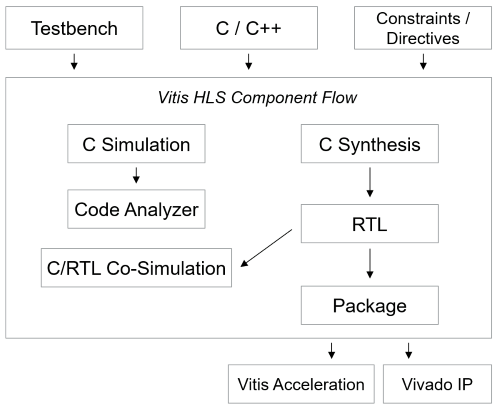
Figure 1: Vitis HLS Flow
Integrated Simulation and Verification: Vitis HLS provides robust simulation tools for functional verification and performance analysis prior to hardware synthesis. This integration allows for the rapid identification and rectification of potential bottlenecks or design flaws, enhancing the reliability of the final implementation.
B. FPGA Platform Selection
The design targets multiple Xilinx FPGA families, each possessing unique resource profiles and characteristics:
| FPGA Model | Key Features | Ideal Use Case |
| Artix-7 | Optimized for low-power applications with constrained resources. | Ideal for edge devices and embedded systems where energy efficiency is crucial. |
| Kintex-7 | Balanced performance and resource availability. | Suitable for general-purpose applications requiring moderate computational capabilities. |
| Virtex-7 | High-performance tier with extensive resources for demanding applications. | Best for high-throughput applications like data centers and high-performance computing. |
Table 1: Xilinx FPGA Families and Their Targeted Application Domains
The selection of FPGA families is based on a careful consideration of trade-offs among resource availability (LUTs, FFs, and DSPs), power consumption, and performance. This approach allows the MAC unit to be tailored to specific application requirements, achieving an optimal balance between performance and cost efficiency.
C. Design Flow and Optimization Techniques
The design flow follows a structured methodology, incorporating several optimization techniques to ensure hardware efficiency and high performance:
Multi-Base Logarithmic Number Representation: The adoption of a multi-base logarithmic number system transforms multiplication operations into additions of logarithmic values, significantly reducing computational complexity and resource demands.
LUT-Based Remainder Handling: The exponent in the LNS is decomposed into quotient and remainder components. The remainder is managed via a LUT, which allows efficient exponentiation with a minimal LUT size by leveraging precomputed remainder values for rapid retrieval.
Resource and Latency Optimization:
Loop Unrolling: Implemented to reduce latency in iterative processes within the MAC unit, enhancing computational speed.
Pipelining: Employed to achieve parallelism and maximize throughput without substantially increasing resource utilization.
Array Partitioning and Data Flow Control: Applied to manage memory resources effectively and reduce latency in data access operations, ensuring efficient data throughput.
Quantization Support: The MAC unit is designed to accommodate quantized values compatible with low-precision neural network training. This design choice enables reduced precision computations without compromising computational accuracy, leading to improved performance and reduced resource consumption.
By integrating these techniques, the design achieves efficient synthesis on FPGA platforms, enabling high-speed, low-power performance suitable for hardware-accelerated applications in DNNs and digital signal processing.
IV. Implementation
The LNS MAC unit was implemented using Vitis HLS to produce an IP core optimized for deployment on multiple Xilinx FPGA platforms, specifically ZCU102, Artix-7, Kintex-7, and Virtex-7. The focus was on developing an efficient design using Log8 arithmetic and evaluating its performance relative to other data types (short integer, long integer, half-precision, floating-point, and double precision) to highlight the benefits of Log8. The implementation process included project configuration, resource optimization, performance benchmarking, and verification to ensure consistency and functionality across FPGA families.
A. Architecture Overview
The proposed architecture employs a structured data flow to efficiently execute logarithmic arithmetic operations. As illustrated in Figure 2, the process begins with a Sort Unit that classifies incoming operands based on their exponent ranges. This sorting step ensures that operands are directed to appropriate accumulator-multiplier units, enabling concurrent execution of multiple operations in parallel lanes. Within each lane, multiplication is realized as logarithmic addition, which reduces hardware complexity and mitigates the need for resource-intensive multipliers.
Exponentiation is managed through shift operations determined by integer exponents, thereby lowering the overhead associated with floating-point arithmetic. Simultaneously, the fractional components of exponents—represented as remainders—are processed using a compact LUT. This approach avoids large polynomial approximations and enables efficient, low-latency calculations. Partial results from individual lanes are subsequently aggregated by an Adder, merging multiple parallel outputs into a single logarithmic representation.
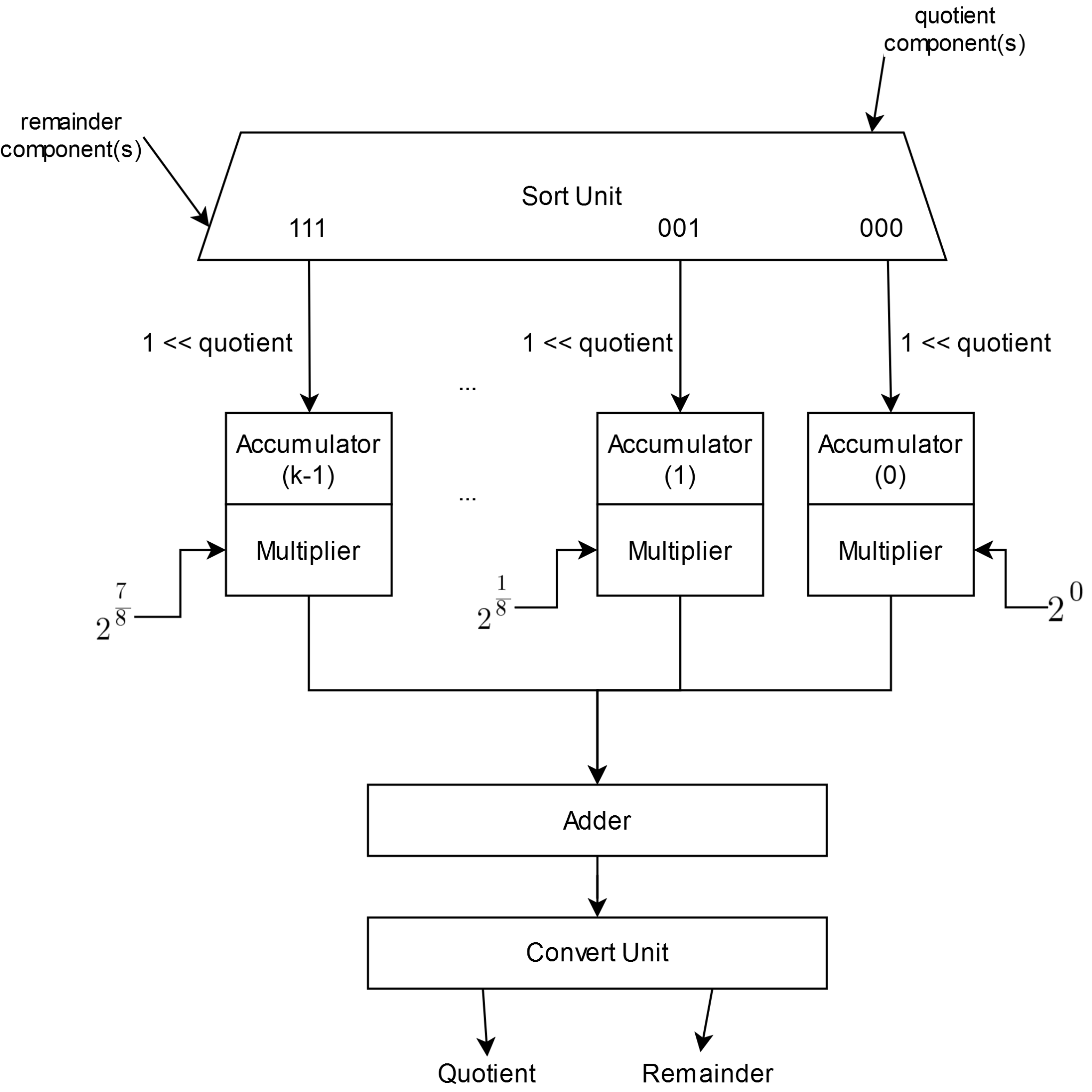
Figure 2: Diagram of the LNS-Based Multiply-Accumulate Unit
The final stage employs a Convert Unit that leverages quotient and remainder decomposition to translate the aggregated logarithmic results back into a standard numeric format suitable for downstream computations. By incorporating parallel sorting, shift-based exponentiation, LUT-driven remainder handling, and efficient conversion, this architecture achieves a balanced trade-off between performance, resource utilization, and operational precision. Moreover, its modular structure and parameterizable design allow seamless adaptation to various FPGA platforms and application requirements
B. Configuration of Vitis HLS Project:
The Vitis HLS configuration was designed specifically for the Log8 MAC unit, aiming to produce an IP core that could be synthesized for various FPGA architectures without modifications. Log8 arithmetic requires particular handling due to its logarithmic nature, which was addressed by configuring multiplication and accumulation functions accordingly. Custom templates were employed to manage the Log8 format, taking advantage of its compact representation while ensuring accuracy.
Synthesis directives, including pipelining and loop unrolling, were applied to improve latency and throughput. Additionally, reuse strategies were explored to further reduce resource consumption. Resource reuse, such as reusing LUTs or shared arithmetic blocks, was implemented selectively. However, it was observed that while reuse can reduce the overall resource footprint, it also introduces additional clock cycles for operations, thereby increasing latency. This trade-off between resource efficiency and operational speed underscores the need to balance these factors based on specific application requirements.
C. Resource Utilization Analysis:
A key objective of the Log8 MAC unit implementation was to minimize hardware resource usage compared to traditional data types like floating-point and double-precision. Vitis HLS provided detailed synthesis reports that allowed for an analysis of resource utilization, focusing on LUTs, FFs, and DSP blocks.
The Log8 MAC unit demonstrated clear advantages in resource efficiency. Unlike floating-point or double-precision implementations, which rely heavily on DSP blocks for multiplication, the Log8 implementation required no DSP blocks, instead leveraging LUTs to perform logarithmic transformations and arithmetic. This allowed significant DSP savings, making Log8 suitable for FPGA applications where DSP resources are limited.
Resource reuse was selectively applied to reduce LUT usage further. For example, arithmetic units were shared between stages where possible, effectively reducing the required number of LUTs and FFs. However, this reuse strategy came at the cost of additional latency, as shared resources introduce sequential dependencies that can slow down operations. For applications prioritizing resource constraints over speed, this trade-off may be acceptable, while for high-throughput requirements, a more aggressive pipelining approach, with minimal resource sharing, would be preferred.
D. Performance Benchmarking:
The performance of the Log8 MAC unit was benchmarked across the target FPGA platforms, with latency and throughput as primary metrics. This benchmarking provided a direct comparison of the computational efficiency of Log8 versus higher-precision data types, emphasizing the trade-offs in latency and resource savings.
Latency, measured in clock cycles, was consistently lower for the Log8 MAC unit compared to high-precision formats such as floating-point and double-precision. The reduced complexity of logarithmic arithmetic contributed to shorter processing times. However, configurations utilizing resource reuse showed increased latency due to sequential processing dependencies. Non-reuse configurations allowed each arithmetic operation to proceed without delays from shared resources, reducing latency further and maximizing throughput.
Throughput was calculated based on latency and the maximum operating frequency supported by each platform. FPGA families such as ZCU102 and Virtex-7, with their more advanced architectures, achieved higher throughput for Log8-based operations, especially in non-reuse configurations that allowed for uninterrupted data processing. This variation in performance metrics underlines the flexibility of the Log8 MAC design, which can be tuned for either maximum speed (minimizing reuse) or resource efficiency (employing reuse) based on specific application demands.
V. Results and Discussion
This section presents a comprehensive analysis of the performance and resource utilization across different data types and FPGA platforms, focusing on Log8, short integer, long integer, half-precision, floating-point, and double-precision arithmetic operations. The results highlight the trade-offs in implementing an 8x8 matrix multiplication accelerator on multiple Xilinx FPGA families (ZCU102, Artix-7, Kintex-7, and Virtex-7). By comparing the resource demands of each data type and exploring the characteristics of each FPGA platform, we gain insights into the optimization strategies and design considerations for hardware-accelerated deep learning applications.
A. Performance Analysis
1) Across Data Types (LUT, FF, DSP)
A key characteristic of the LNS Log8 implementation is its complete avoidance of DSP usage. By representing multiplications as logarithmic additions, LNS Log8 consistently requires zero DSP blocks, in contrast to data types like Float or Double, which demand significant DSP resources. This DSP-free approach is particularly valuable on platforms with limited DSP availability or where they must be reserved for other operations.
However, circumventing DSP utilization shifts the computational burden to LUT and FF resources. Compared to the 4x4 designs, scaling up to 8x8 configurations increases both FF and LUT usage considerably. For instance, the LNS Log8 8x8 configuration on ZCU102 utilizes approximately 11,876 FFs and 101,656 LUTs, while on Artix-7, the same configuration requires around 73,477 FFs and 118,687 LUTs. Kintex-7 and Virtex-7 exhibit similar LUT demands (over 123,000 LUTs) but require fewer FFs (around 54,000), suggesting that certain FPGA architectures handle LNS-based logic structures more efficiently than others (Figure 3). In comparison, conventional floating-point and double-precision formats can exceed these LUT counts and also heavily depend on DSP blocks, underscoring the distinctive resource distribution of LNS Log8 designs.
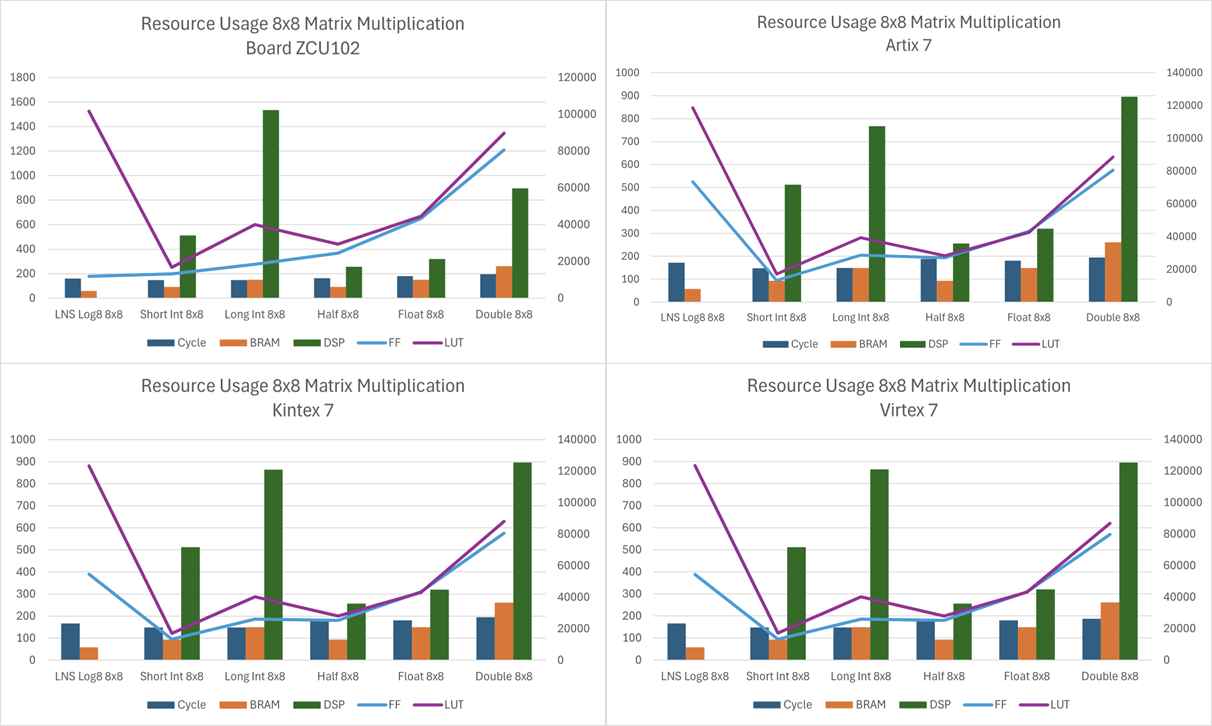
Figure 3: 8x8 Matrix Multiplication Across data types
2) Across FPGA Families
The Artix-7 FPGA exhibits the highest number of flip-flops compared to the Kintex-7 and Virtex-7, which display nearly identical flip-flop usage. Conversely, the Artix-7 utilizes slightly fewer LUTs than the Kintex-7 and Virtex-7 (Figure 4).
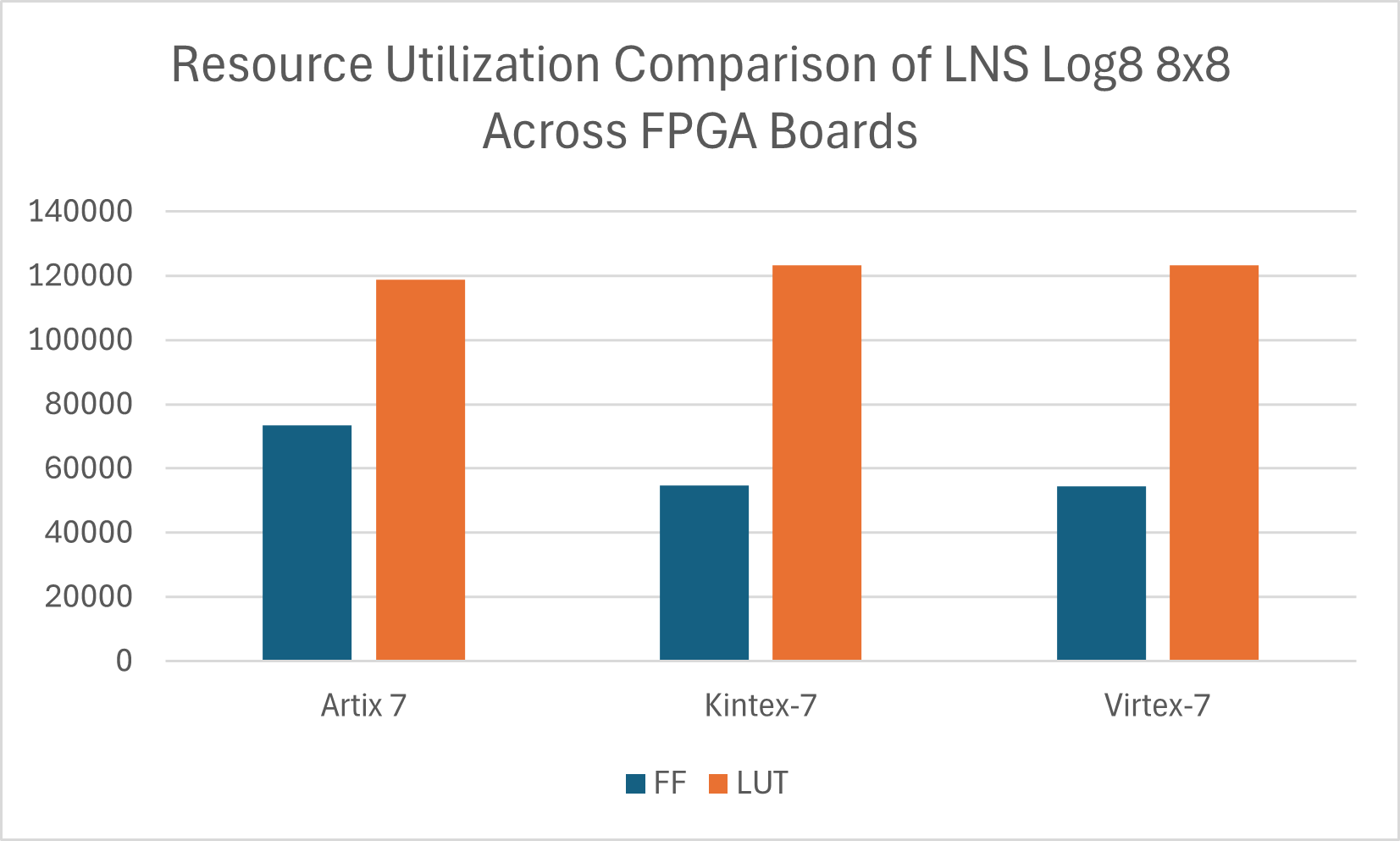
Figure 4: 8x8 Matrix Multiplication Across FPGAs
The elevated flip-flop count in the Artix-7 can be attributed to its optimization for low power consumption and cost-effectiveness. This FPGA family likely employs architectural strategies that prioritize storage elements over combinational logic blocks, potentially through increased pipelining or specific synchronous design methodologies. Such optimizations enable the Artix-7 to maintain efficient performance while adhering to power and budget constraints.
In contrast, the Kintex-7 and Virtex-7 FPGAs demonstrate similar resource demands, particularly in LUT usage. This similarity suggests a high density of combinational logic implementation within these families. Both Kintex-7 and Virtex-7 are engineered to strike a balance between performance and cost, with the Virtex-7 specifically targeting higher performance applications. The comparable resource utilization between the Kintex-7 and Virtex-7 indicates that the LNS Log8 8x8 design scales efficiently across these platforms, maintaining consistent resource demands without significant variation.
B. Matrix Size Impact:
The resource usage exhibits a clear upward trend as computational complexity increases with matrix dimensions, with both FF and LUT utilization growing non-linearly as matrix size increases from 4x4 to 20x20. For instance, FF utilization rises from 5,435 for a 4x4 matrix to 68,000 for a 20x20 matrix, while LUT usage expands from 56,000 to 387,000 over the same range (Figure 5).
This scaling reflects the increasing computational demand associated with larger matrices, driven by the greater number of operations required for multiplication and accumulation. The non-linear growth in resource utilization indicates that larger matrices introduce additional complexities in hardware implementation, necessitating careful resource management to avoid exceeding FPGA capacity.
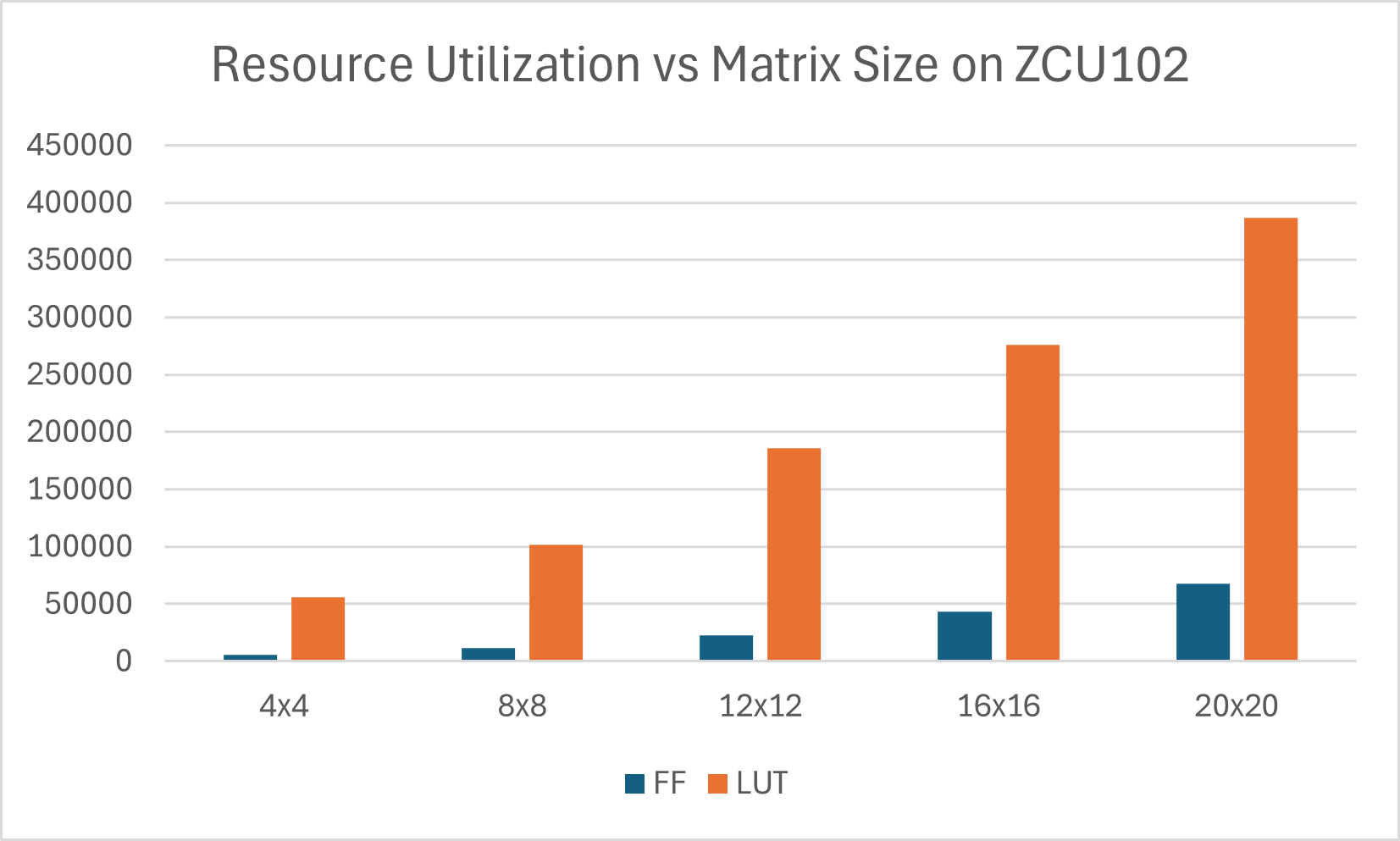
Figure 5: Scaling of FF and LUT Utilization with Matrix Size on ZCU102
While the overall scalability is evident, the analysis suggests potential areas for optimization to enhance design efficiency and better manage resource allocation. Techniques such as pipelining, parallelism, and resource sharing could help mitigate the rapid growth in resource consumption. Additionally, adopting fixed-point arithmetic or other lightweight data representations could reduce LUT usage without significantly impacting precision for certain applications. Balancing these optimizations is essential to maintain performance while adhering to resource constraints, ensuring the MAC design remains scalable and efficient across varying matrix sizes.
C. Latency and Throughput
Latency measurements indicate that LNS Log8 attains relatively stable performance across platforms. On ZCU102, LNS Log8 8x8 completes in about 160 cycles, while Kintex-7 and Virtex-7 require roughly 166 cycles, and Artix-7 needs 172 cycles (Figure 6 bottom). Although slight differences emerge due to architectural variations, these figures remain competitive when considering the elimination of DSP blocks and reliance on LUT-based arithmetic.
Throughput, computed from latency and operating frequency, corroborates this balanced performance profile. While Short Int and Long Int configurations can deliver marginally higher throughput, LNS Log8 consistently outperforms Half, Float, and Double. For instance, on ZCU102, LNS Log8 achieves a throughput of about 0.00625—slightly trailing Short Int (0.00676) and Long Int (0.00680) but notably surpassing Half (0.00617), Float (0.00556), and Double (0.00513) (Figure 6 top). Similar patterns emerge across Artix-7, Kintex-7, and Virtex-7, confirming that LNS Log8 provides a measured compromise between raw performance and resource efficiency. This balance makes it appealing for latency-sensitive applications where the overhead of floating-point logic or double-precision arithmetic cannot be justified.
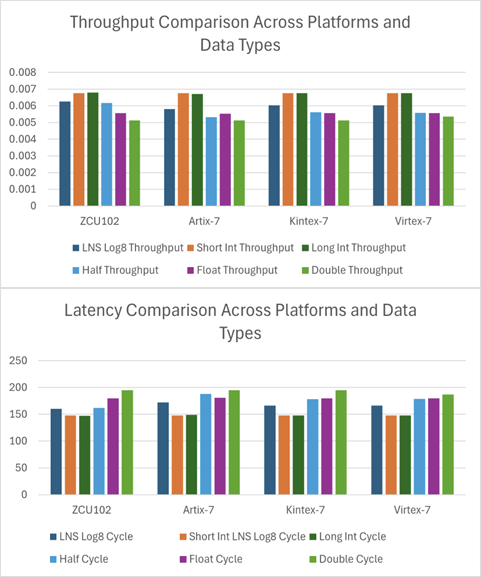
Figure 6: Throughput and Latency Comparison Across FPGA Platforms and Data Types
D. Power Consumption
Power measurements on the Artix-7 platform highlight the energy advantages of LNS Log8. Both LNS Log8 and Short Int consume approximately 194 mW, representing the lower end of the power spectrum. In contrast, more complex formats require greater power, with Double consuming up to 315 mW (Figure 7). Since power scales with resource utilization and the complexity of arithmetic operations, the simplified logarithmic arithmetic in LNS Log8 helps keep power usage under control. Such energy efficiency is beneficial for edge computing scenarios, portable systems, or data center environments where power constraints and thermal budgets are stringent.
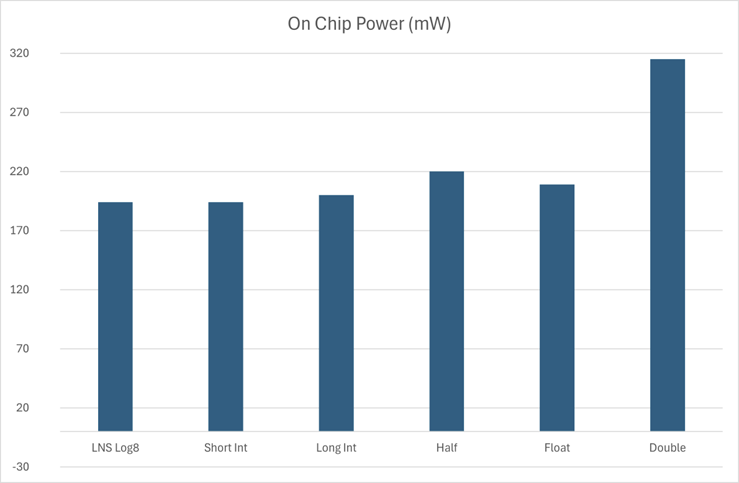
Figure 7: On-Chip Power Consumption (mW) Comparison Across Data Types
E. Accuracy and Precision Considerations
While the results underscore LNS Log8’s efficiency, it is important to note that logarithmic arithmetic and associated LUT-based remainder handling can introduce small quantization errors. These minor inaccuracies are often acceptable in deep neural network workloads, which exhibit inherent resilience to low-precision computations. Nevertheless, designers targeting highly sensitive applications may consider refining the LUT-based approximation methods or employing adaptive quantization strategies to further improve accuracy without undermining LNS Log8’s resource and power advantages.
VI. Conclusion
A. Key Findings
This study presents, to the best of our knowledge, the first successful implementation of a LNS MAC unit based on the low-precision LNS-based training methodology by Zhao et al. [1] across multiple Xilinx FPGA families. By employing HLS with Vitis HLS, the work advances beyond conventional base-2 logarithmic arithmetic, incorporating multiple bases and fractional exponents. This added flexibility enables the MAC unit to adapt more effectively to a wide range of DNN architectures and datasets.
Several key contributions highlight the significance of this research. First, by converting multiplications into logarithmic additions, the MAC unit substantially reduces computational overhead. The quotient-remainder decomposition facilitates efficient exponentiation via compact LUT-based conversions, thereby streamlining hardware utilization and improving arithmetic efficiency. Second, leveraging Vitis HLS pragmas such as loop unrolling and pipelining provided a fine-grained approach to balancing resource usage against latency and throughput demands, reinforcing the practical feasibility of adopting LNS arithmetic at scale.
Crucially, a cross-family FPGA comparison—spanning Artix-7, Kintex-7, and Virtex-7 devices—revealed distinct performance and resource utilization patterns. This multi-platform evaluation not only underscores the adaptability of the LNS-based MAC design but also provides concrete insights into optimizing future implementations for specific architectural constraints. Furthermore, the demonstrated capability to eliminate DSP usage in favor of LUT and FF resources allows the architecture to scale efficiently, from low-power edge deployments to high-throughput data center accelerators.
In sum, this work bridges the gap between the theoretical advantages of LNS arithmetic and its practical realization on modern FPGA platforms. By confirming that LNS-based MAC units can achieve meaningful performance and resource efficiency in a hardware setting, this research paves the way for broader adoption of logarithmic arithmetic in DNN inference and training accelerators.
B. Future Research Directions
Building on the findings of this study, future research can explore the following avenues:
Enhanced Optimization Techniques: Further investigation of resource sharing and refined LUT compression could drive down latency and area overhead. Incorporating adaptive pipelining strategies, custom arithmetic libraries, or specialized approximation techniques may lead to even more efficient implementations.
Extended FPGA Platforms: Assessing the LNS-based MAC unit on emerging architectures such as Xilinx Versal ACAP can illuminate how heterogeneous compute capabilities and advanced interconnect structures influence the scalability, energy efficiency, and overall adaptability of LNS arithmetic.
Integration with Full DNN Architectures: Embedding the MAC unit into complete DNN models, both for inference and training, will offer deeper insights into system-level gains in terms of performance, energy consumption, and accuracy. Such end-to-end evaluations can clarify the role of LNS arithmetic in accelerating real-world applications, from embedded machine learning devices to large-scale data analytics pipelines.
Refined Error and Quantization Management: A more detailed exploration of quantization effects and error propagation is warranted. Dynamic LUT selection, adaptive rounding schemes, or hybrid quantization strategies may further refine accuracy without undermining the power and resource benefits of LNS arithmetic.
Software-Hardware Co-Design: Coordinated optimization of DNN algorithms and their LNS-based hardware implementations could unlock additional performance gains. Tailoring training and inference algorithms to LNS arithmetic—through specialized network topologies, loss functions, or regularization methods—has the potential to create a new class of highly efficient, hardware-aware machine learning solutions.
VII. References
[1] Jiawei Zhao, Steve Dai, Rangharajan Venkatesan, Brian Zimmer, Mustafa Ali, Ming-Yu Liu, Brucek Khailany, William J. Dally, Anima Anandkumar (LNS-Madam: Low-Precision Training in Logarithmic Number System using Multiplicative Weight Update) (https://arxiv.org/pdf/2106.13914)
[2] S. E. Tropea, "FPGA Implementation of Base-N Logarithms," presented at the III Southern Conference on Programmable Logic (SPL2007), 2007.
[3] I. Klimo, M. Kocúr, and P. Drahos, "Implementation of Logarithmic Number Systems in Control Applications using FPGA," in Proceedings of the IEEE International Symposium on Industrial Electronics, 2006.
[4] H. Fu, O. Mencer, and W. Luk, "Optimizing Logarithmic Arithmetic on FPGAs," Department of Computing, Imperial College London, 2006.
[5] Matousek, Rudolf & Tichy, Milan & Pohl, Zdenek & Kadlec, Jiri & Softley, Chris & Coleman, Nick. (2002). Logarithmic Number System and Floating-Point Arithmetics on FPGA. 2438. 627-636. 10.1007/3-540-46117-5_65.
[6] T. A. M. Weber, C. Pötl, M. Happe, and M. Platzner, "Automatic Generation of Multi-Precision Fixed-Point Multiply-Accumulate Units for FPGAs," 2019 International Conference on Field-Programmable Technology (FPT), pp. 308–311, 2019.